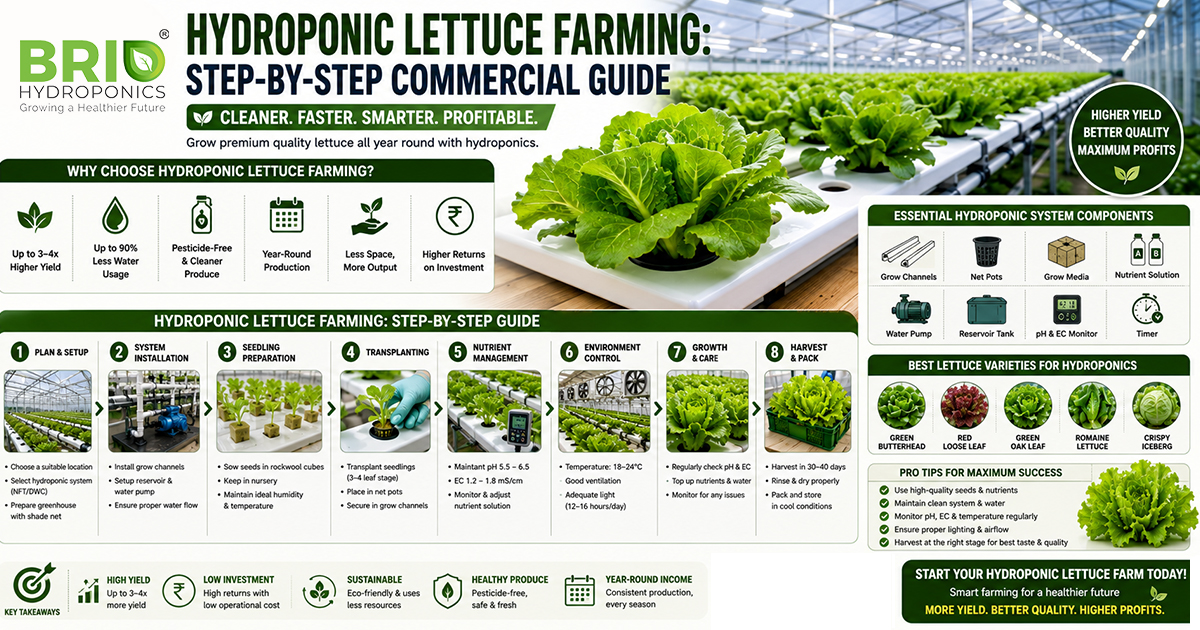
If you are looking for a crop that gives fast returns, requires less space, and sells well throughout the year, then hydroponic lettuce farming is one of the best options available today. Lettuce is a cool-season crop and grows extremely well without soil when managed properly. For farmers in India who are just stepping into modern farming, lettuce hydroponics is a practical and profitable starting point.
In this blog, we will cover everything from system selection to harvest in a simple, step-by-step format so that even a first-time grower can understand and apply it on the ground.
Why Lettuce is the Best Crop for Hydroponics
Lettuce is considered the ideal beginner crop for lettuce hydroponics systems because of several practical reasons:
- It has a short crop cycle, usually 25 to 35 days from transplant to harvest
- It grows well in shallow nutrient channels, making it perfect for NFT systems
- Demand for fresh lettuce is high in supermarkets, hotels, restaurants, and cafes
- It grows well in Indian conditions when proper shade and temperature management is done
- Hydroponic vegetables in India are gaining popularity in urban areas, and lettuce leads the list
Best System for Lettuce Hydroponics
Before you plant a single seed, you need to select the right growing system. The best system for lettuce hydroponics depends on your budget, space, and scale of operation.
NFT (Nutrient Film Technique)
This is the most widely used system for commercial leafy greens hydroponics. In NFT, a thin film of nutrient solution continuously flows over the roots. It uses very little water and is highly efficient. Best suited for lettuce because of the plant's small root mass.
DWC (Deep Water Culture)
In this system, plants are suspended in net pots above a reservoir filled with nutrient solution. Roots are always submerged. DWC is low cost and easy to manage, making it great for small commercial setups and rooftop farms.
Vertical NFT Towers
For growers with limited floor space, vertical towers are a smart option. You can grow more plants per square foot, which directly improves lettuce yield in hydroponics per square meter.
Step-by-Step Guide: How to Grow Lettuce in Hydroponics
Here is a complete breakdown of how to grow lettuce in hydroponics step by step:
Step 1: Seed Germination
Sow lettuce seeds in rockwool cubes or cocopeat seedling trays. Maintain temperature between 18 to 22 degrees Celsius. Seeds usually germinate within 3 to 5 days. Keep the trays moist but not waterlogged. Provide indirect light or use grow lights if natural light is insufficient.
Step 2: Seedling Stage
Once seeds sprout and develop the first true leaf, move seedlings to a nursery area. Let them grow for 7 to 10 days more before transplanting. During this phase, use a mild nutrient solution with an EC of around 0.8 to 1.2 mS/cm and a pH of 5.5 to 6.5.
Step 3: Transplanting into the Hydroponic System
Transfer seedlings carefully into net pots. Place net pots into the NFT channels or DWC reservoirs. Make sure roots have access to the nutrient solution from the start. Spacing is important. For butter lettuce, maintain a spacing of about 20 cm. For looseleaf varieties, 15 cm is sufficient.
Step 4: Nutrient Management
Lettuce is a light feeder compared to fruiting crops. Maintain EC between 1.2 and 2.0 mS/cm and pH between 5.5 and 6.5. Change the nutrient solution completely every 7 to 10 days to avoid salt buildup. Use a complete hydroponic fertilizer that includes all macro and micronutrients including nitrogen, phosphorus, potassium, calcium, and magnesium.
Step 5: Light and Temperature
Lettuce needs 12 to 16 hours of light per day. In hot Indian summers, it is best to grow lettuce inside a polyhouse or net house with shade cloth. Ideal temperature range is 15 to 25 degrees Celsius. High temperatures above 30 degrees can cause bolting, where the plant goes to seed prematurely.
Step 6: Pest and Disease Management
Hydroponic lettuce has far fewer pest issues than soil-grown lettuce. Still, watch out for aphids, whiteflies, and fungal diseases like powdery mildew. Use neem oil spray, yellow sticky traps, and ensure good air circulation to keep your crop healthy.
Step 7: Harvest
Lettuce is ready to harvest in 25 to 40 days from transplant, depending on the variety. You can harvest the whole head or use the cut-and-come-again method for looseleaf types. Always harvest in the early morning when leaves are crisp and hydrated.
Lettuce Yield in Hydroponics Per Square Meter
One of the most common questions from new growers is about yield expectations. The lettuce yield in hydroponics per square meter is much higher than traditional soil farming because of dense planting and fast crop cycles.
- Each plant typically produces between 100 to 300 grams of fresh lettuce depending on the variety
- NFT system: You can grow 20 to 30 plants per square meter with proper spacing
- With 8 to 10 crop cycles per year possible, total annual output per square meter is very high
- Vertical systems can double the effective growing area and improve output significantly
Commercial Lettuce Farming Hydroponics in India
Commercial lettuce farming hydroponics in India is growing fast in cities like Pune, Bengaluru, Hyderabad, Delhi NCR, and Mumbai. The demand from hotels, cloud kitchens, and organised retail chains is high and consistent.
Key markets to target include:
- 5-star hotels and restaurant chains that need premium quality salad greens
- Supermarkets and specialty grocery stores
- Direct-to-consumer delivery through your own brand or aggregator platforms
- Corporate canteens and school cafeterias that need fresh leafy greens regularly
Hydroponic Farming Crops India: Where Lettuce Fits In
Among all hydroponic farming crops in India, lettuce is the easiest to commercialise quickly. It does not require complex infrastructure. A well-managed NFT setup inside a net house or polyhouse can generate consistent income throughout the year.
What makes lettuce particularly attractive for Indian farmers:
- Short payback period because of the fast crop cycle
- Consistent buyer demand from urban food businesses
- Lower water usage compared to open-field farming
- Grows well in controlled environments even during extreme seasons
Tips for Success in Hydroponic Lettuce Farming
- Always start with a small pilot batch before scaling up
- Monitor EC and pH at least twice a day in initial phases
- Choose local lettuce varieties that are heat-tolerant for Indian conditions
- Build your buyer network before you harvest your first crop
- Keep records of every batch to understand what works best in your local climate
Ready to Start Your Hydroponic Lettuce Farm?
Whether you are a farmer looking to diversify your income or an entrepreneur entering modern agriculture, hydroponic lettuce farming is one of the most rewarding paths you can take. The crop is fast, the demand is strong, and the technology is easy to learn.
Contact our team today for a free consultation on setting up your hydroponic lettuce farm. We help you plan your system, source quality inputs, and connect with the right buyers in your city.
Do not wait for the perfect time. Start small, learn fast, and grow big.
Frequently Asked Questions (FAQs)
Q1. Is hydroponic lettuce farming profitable in India?
Yes, it is profitable when you have consistent buyers lined up. Urban markets have strong demand for hydroponic lettuce throughout the year. The short crop cycle means you can recover your investment faster than most other farming methods.
Q2. Which is the best system for lettuce hydroponics?
NFT (Nutrient Film Technique) is the most popular and efficient system for growing lettuce commercially. DWC is a good option for smaller setups and rooftop farms.
Q3. How long does it take to grow lettuce in hydroponics?
From seed to harvest, lettuce typically takes 35 to 50 days. From transplant, it takes 25 to 35 days depending on the variety and environmental conditions.
Q4. What is the lettuce yield in hydroponics per square meter?
In a well-managed NFT system, you can produce 2 to 5 kg of fresh lettuce per square meter per crop cycle. With 8 to 10 cycles in a year, the annual output is quite high compared to traditional farming.
Q5. Can lettuce be grown in hydroponic systems in summer in India?
Yes, but it requires temperature control. Growing inside a polyhouse with a fan-and-pad cooling system or using a shade net helps manage heat stress. Some heat-tolerant varieties are better suited for Indian summer conditions.
Q6. What nutrients does hydroponic lettuce need?
Lettuce needs a balanced nutrient solution with nitrogen, phosphorus, potassium, calcium, and magnesium as primary nutrients. Micronutrients like iron, manganese, and zinc are also needed in small amounts. Use a dedicated lettuce nutrient formula for best results.
Q7. Where can I sell hydroponic lettuce in India?
Restaurants, hotels, cafes, supermarkets, and direct-to-consumer delivery platforms are the main channels. Building direct relationships with buyers in your city gives you more control over pricing and ensures consistent offtake.